
What We Don't See, We Cannot Change
Why awareness and self-awareness are often uncomfortable — and why they're essential for personal growth.
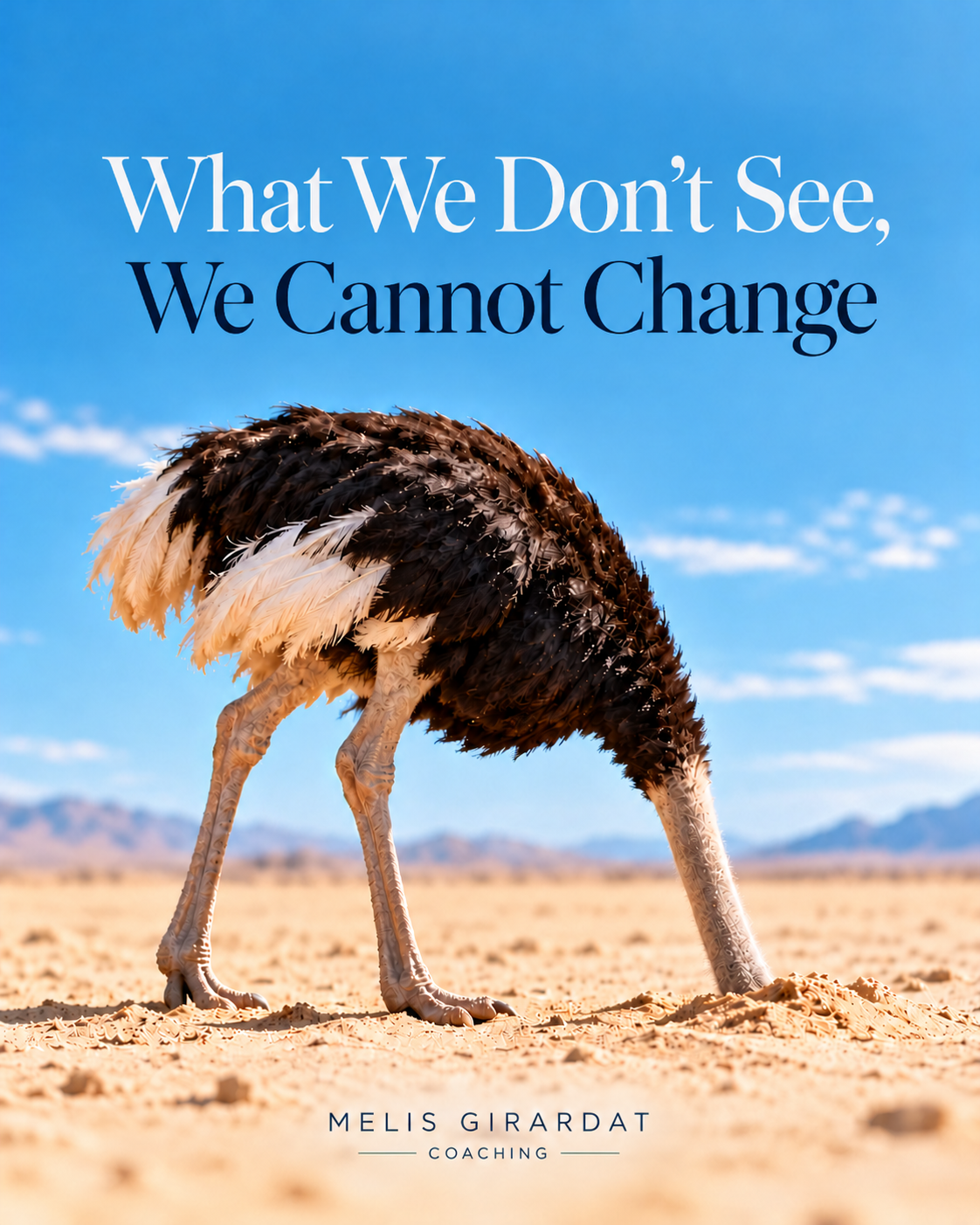
We've all heard the expression about burying our heads in the sand.
Sometimes, it feels easier not to look. Not to question. Not to acknowledge something that might challenge what we've always believed about ourselves, our relationships, or the world around us.
And sometimes, we're not even aware that there's something we're avoiding.
But here's the thing: What we don't see, we cannot change.
Awareness Is the First Step Toward Change
Awareness sounds simple enough. Just open your eyes, recognize what's happening, and make a change.
If only it were that easy.
Becoming aware of something can challenge our assumptions, our beliefs, and even our sense of identity.
It might mean recognizing that a relationship wasn't what we thought it was. That a behavior we've always considered normal is actually holding us back. Or that a pattern we've repeated for years is no longer serving us.
Sometimes awareness comes suddenly, like a light being switched on.
Other times, it develops slowly, through experiences, conversations, reflection, and moments when something just doesn't feel quite right.
And once we begin to see things differently, it can be difficult to go back to seeing them the way we did before.
Why Self-Awareness Can Be Even Harder
It's one thing to recognize what's happening around us. It's another to turn that same curiosity inward.
Self-awareness asks us to examine our thoughts, feelings, reactions, beliefs, and behaviors.
Why do certain situations trigger such strong emotions?
Why do we keep finding ourselves in similar relationships or situations?
Why do we struggle to set boundaries, say no, or put our own needs first?
Why do we sometimes act in ways that contradict what we truly want?
These aren't always comfortable questions.
The answers may reveal habits we've developed over a lifetime, beliefs we've never questioned, or coping mechanisms that once protected us but no longer serve us.
And recognizing these patterns can be unsettling.
After all, it's much easier to continue doing what we've always done than to question why we're doing it in the first place.
Understanding Ourselves Without Blaming Ourselves
There's an important distinction between self-awareness and self-blame.
This is especially true when reflecting on difficult or unhealthy relationships.
We might look back and wonder why we didn't recognize certain behaviors sooner. Why we ignored warning signs. Why we stayed longer than we wish we had.
But hindsight gives us a perspective we didn't necessarily have at the time.
Sometimes we simply didn't have the information, experience, or emotional distance needed to understand what was happening.
And sometimes our responses were ways of coping with circumstances that felt overwhelming or unsafe.
Self-awareness isn't about judging ourselves for what we didn't know. It's about understanding ourselves with the knowledge we have today.
We can take responsibility for our choices and behaviors without taking responsibility for someone else's actions.
We can recognize patterns we'd like to change without criticizing ourselves for having developed them.
And we can acknowledge painful experiences without allowing them to define who we are.
Awareness becomes much more powerful when it's accompanied by compassion.
The Discomfort of Seeing Things Differently
One of the hardest parts of becoming more aware is accepting that our understanding of ourselves or our lives may need to change.
Perhaps we begin to recognize that we've spent years trying to please others at the expense of our own needs.
Perhaps we realize that what we thought was love sometimes involved fear, obligation, or a need for approval.
Or perhaps we discover that some of the beliefs we've held about ourselves were never really ours to begin with.
These realizations can bring sadness, anger, grief, or uncertainty.
And that's understandable.
Growth isn't always a beautiful, uplifting experience. Sometimes it involves letting go of familiar stories, expectations, and identities.
Sometimes it means grieving what we thought we had, what we hoped something would become, or the version of ourselves we believed we needed to be.
But discomfort doesn't necessarily mean we're moving in the wrong direction.
Sometimes it means we're beginning to see something important.
Awareness Creates Possibility, Not Instant Change
Recognizing a pattern doesn't mean we can immediately change it.
Understanding why we struggle with boundaries doesn't automatically make setting them easy.
Recognizing an unhealthy belief doesn't mean it disappears overnight.
And becoming aware of an emotional trigger doesn't mean we'll never experience that reaction again.
Awareness is a beginning, not a finish line.
Real change often takes time, patience, practice, and a willingness to approach ourselves with curiosity rather than criticism.
We may take steps forward and occasionally fall back into familiar patterns.
That's part of being human.
The important thing is that awareness gives us something we didn't have before: the possibility of making a different choice.
Instead of reacting automatically, we can begin to pause.
Instead of accepting old beliefs as unquestionable truths, we can examine them.
Instead of repeating familiar patterns without understanding them, we can begin to explore alternatives.
And gradually, those small moments of awareness can lead to meaningful change.
Choosing to Look, Even When It's Difficult
There's a reason the image of an ostrich with its head buried in the sand resonates with so many of us.
Avoidance can feel protective.
Sometimes not knowing, not questioning, or not confronting something offers temporary relief.
And there may be times when we're simply not ready to face a difficult truth. That doesn't make us weak. It makes us human.
But when we feel ready, approaching those uncomfortable places with curiosity and compassion can open the door to something different.
Greater clarity.
A deeper understanding of ourselves.
Healthier boundaries.
More conscious choices.
And ultimately, a life that feels more aligned with who we truly are and what we want.
Because while awareness doesn't make change easy, it makes change possible.
What we don't see, we cannot change. But once we begin to see, we give ourselves the opportunity to choose what comes next.
A Moment for Reflection
Take a moment to consider:
- Is there something in your life you've been reluctant to acknowledge?
- Are there patterns in your thoughts, behaviors, or relationships that you're beginning to recognize?
- What might become possible if you approached those patterns with curiosity rather than judgment?
You don't need to have all the answers today.
Sometimes, simply being willing to ask the questions is where meaningful change begins.
At Melis Girardat Coaching, I support people in healing from the past, reconnecting with themselves, and creating a life they love.
If you're ready to build the self-awareness to grow, change, and create a life you love, please reach out. 💛